DOW JONES I AI platform I Financial intelligence I SaaS

From data overload to role-aware intelligence

Description

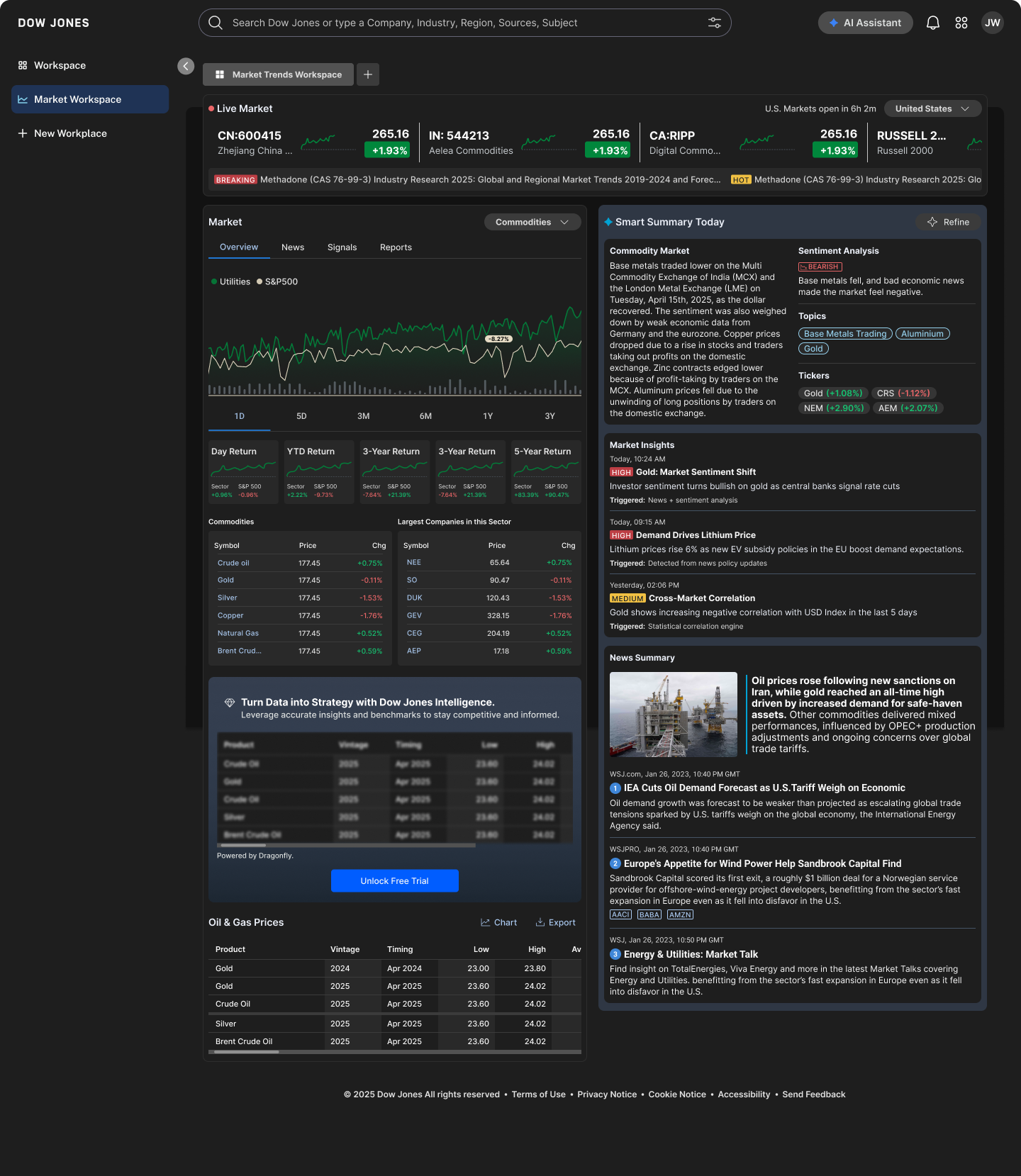
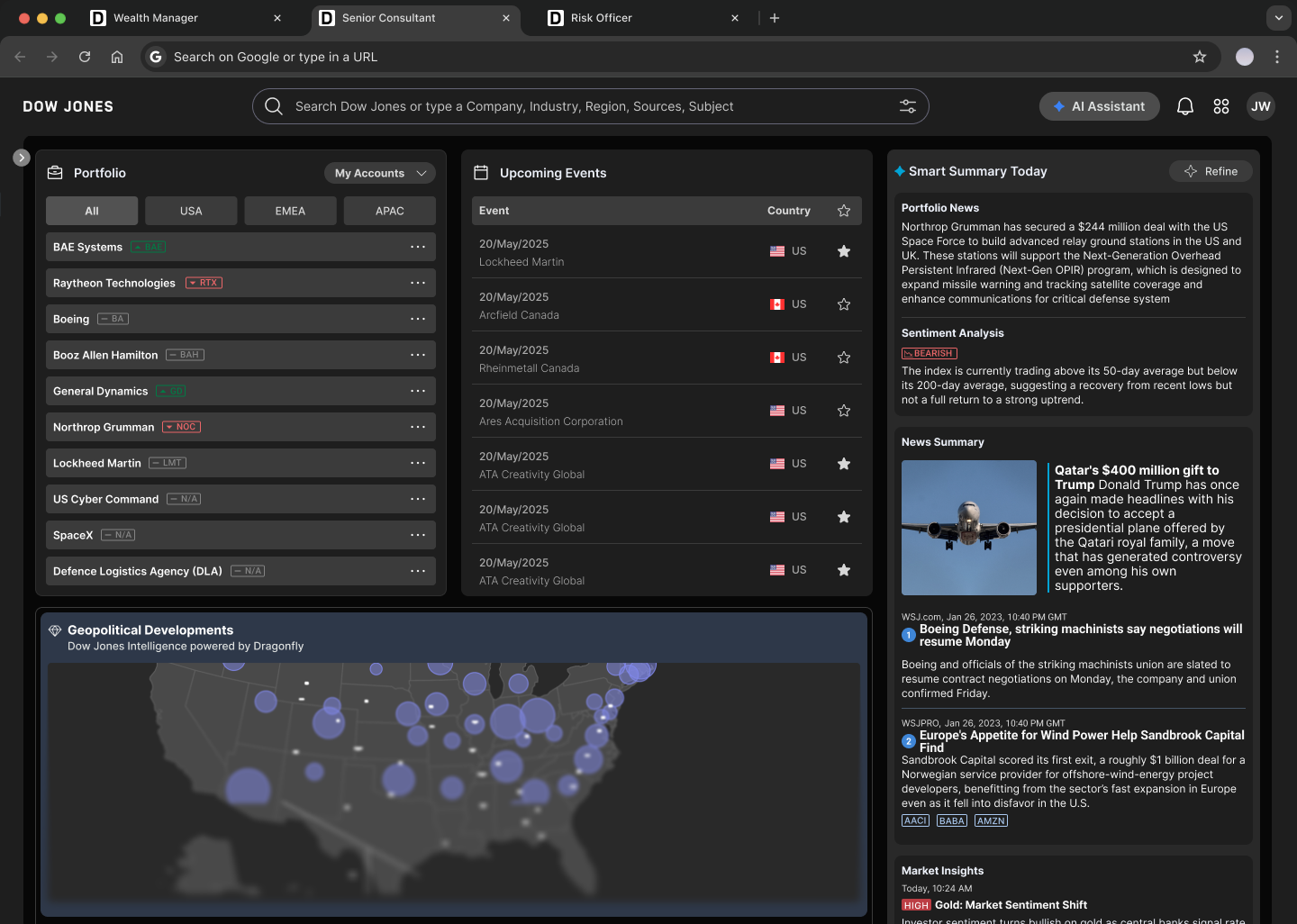
I led the design of Dow Jones's AI-powered Workspace, a platform that reshapes itself around who you are and what you need, the moment you log in. Built for wealth managers, risk officers, and senior consultants who can't afford to waste time finding the signal in the noise.

The Challenge

Dow Jones operated seven separate legacy products delivering similar datasets across disconnected tools. Users repeated queries across platforms, switching contexts constantly. Design inconsistencies fragmented the experience, and competitive pressure from AI-native intelligence tools was mounting.

- Duplicated engineering investment across products
- Slower product delivery cycles
- Weaker competitive position against AI-native tools
- Outdated UX slowing enterprise adoption

Strategic Opportunity

Instead of iteratively improving individual products, we reframed the entire ecosystem as a platform problem.

The north star: transform fragmented products into a unified intelligence platform enabling faster strategic decisions.This required reimagining the information architecture, establishing a shared design language, and positioning AI as a core intelligence layer, not an afterthought.

solution

Key Product Decisions shaped by design and user research

01 / Unified Search as the intelligence Layer

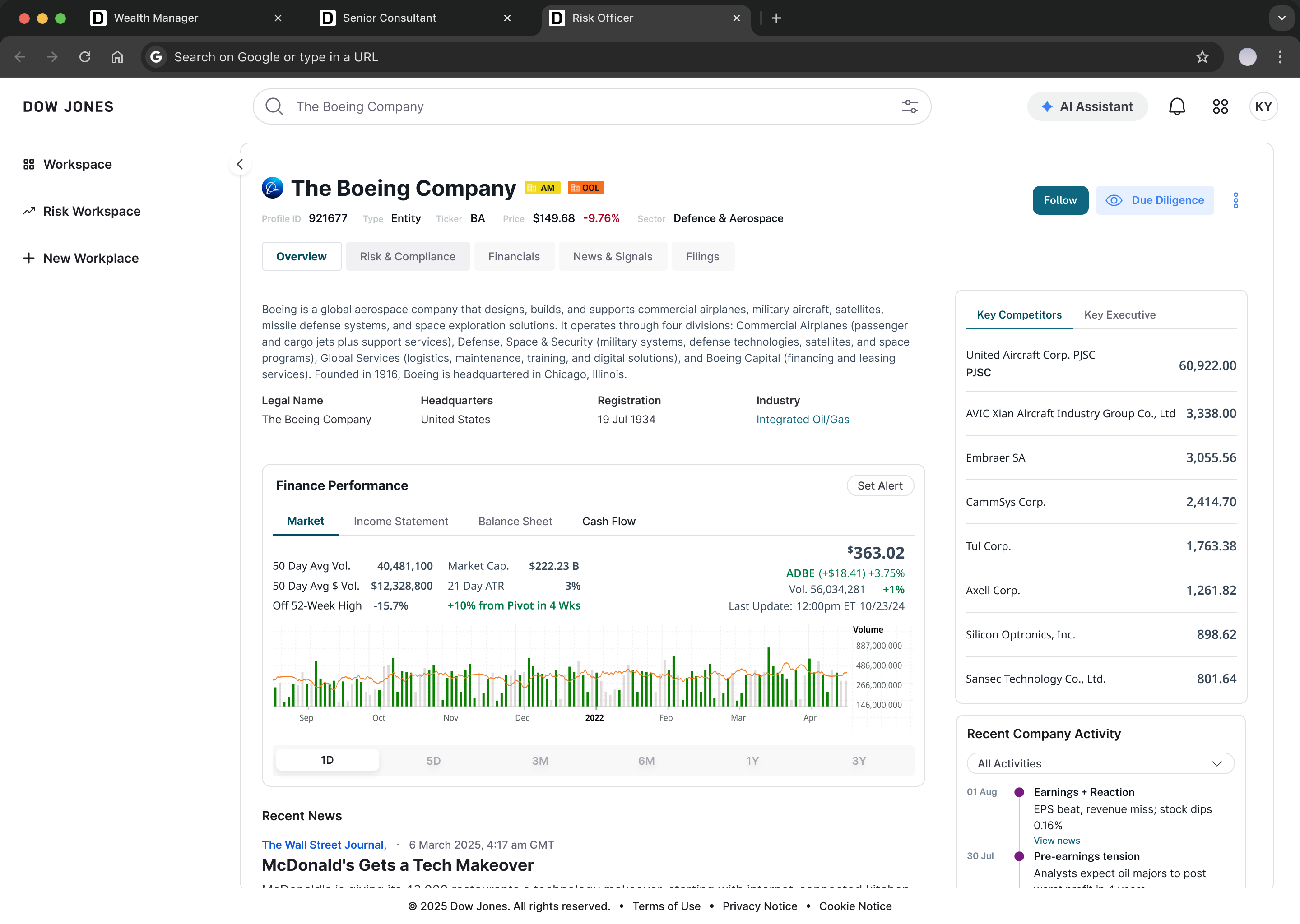
Rather than embedding search within each product, we created one unified search layer across all Dow Jones datasets. This became the front door to the entire platform—transforming how users discover information and reducing query repetition by 80%.

02 / Workspace Model

Introduced a workspace model enabling users to create custom analysis environments combining data from multiple sources. This eliminated the need to context-switch across isolated tools and reduced time-to-insight for complex research queries.

03 / Platform-First AI Instead of Onboarding Friction.

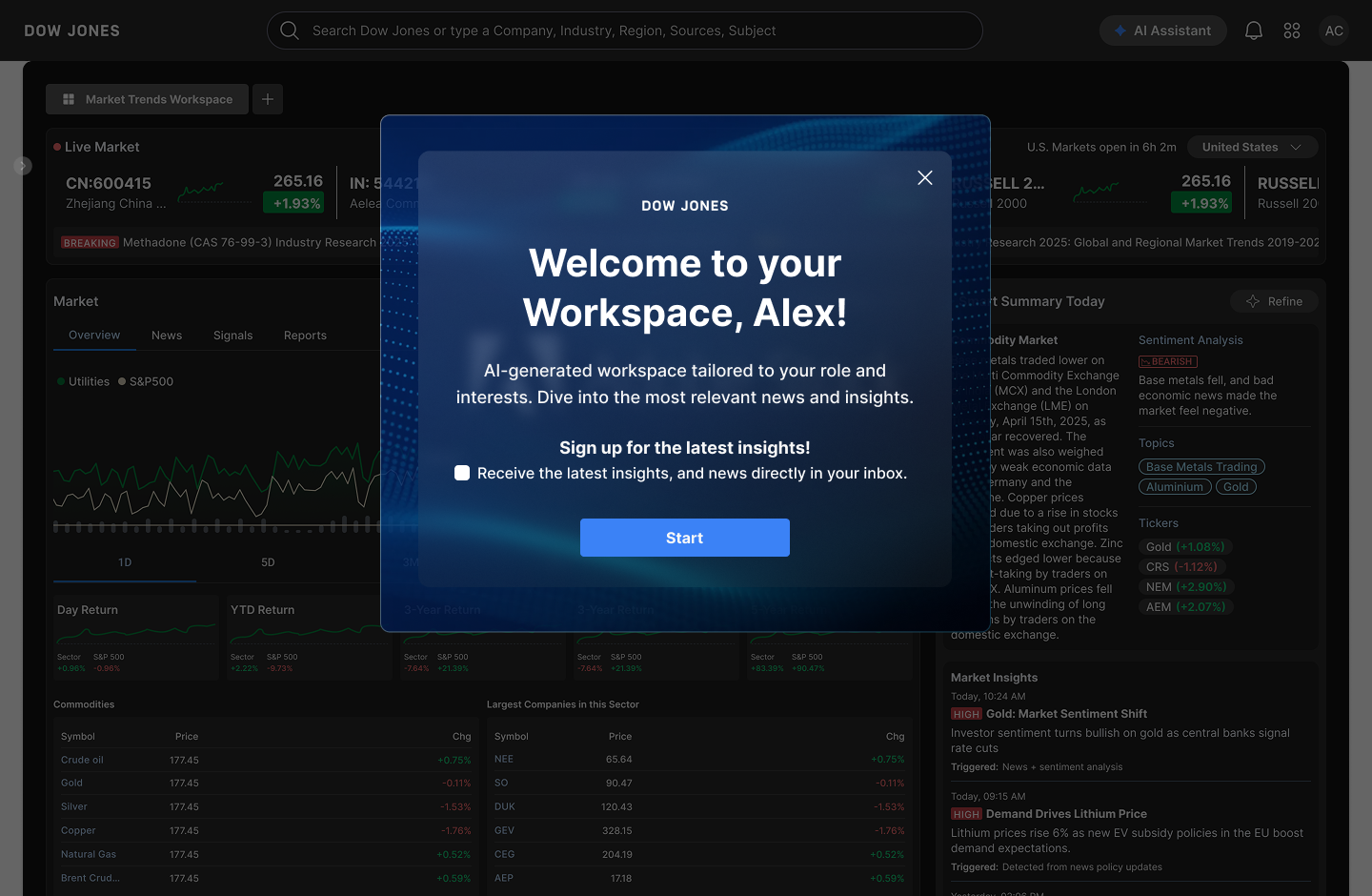
Rather than gating AI behind educational onboarding, we embedded an AI assistant directly into research workflows. Users could ask questions immediately after login—reducing time-to-value from days to minutes and increasing feature adoption by 240%.

04 / Design Governance at Scale

Established a clear governance model defining roles, contribution logic, and decision rights across 15 designers. This enabled rapid, consistent shipping while maintaining platform coherence across seven product teams in three regions.

Design System Foundation

New design system for 32 products B2B/B2C

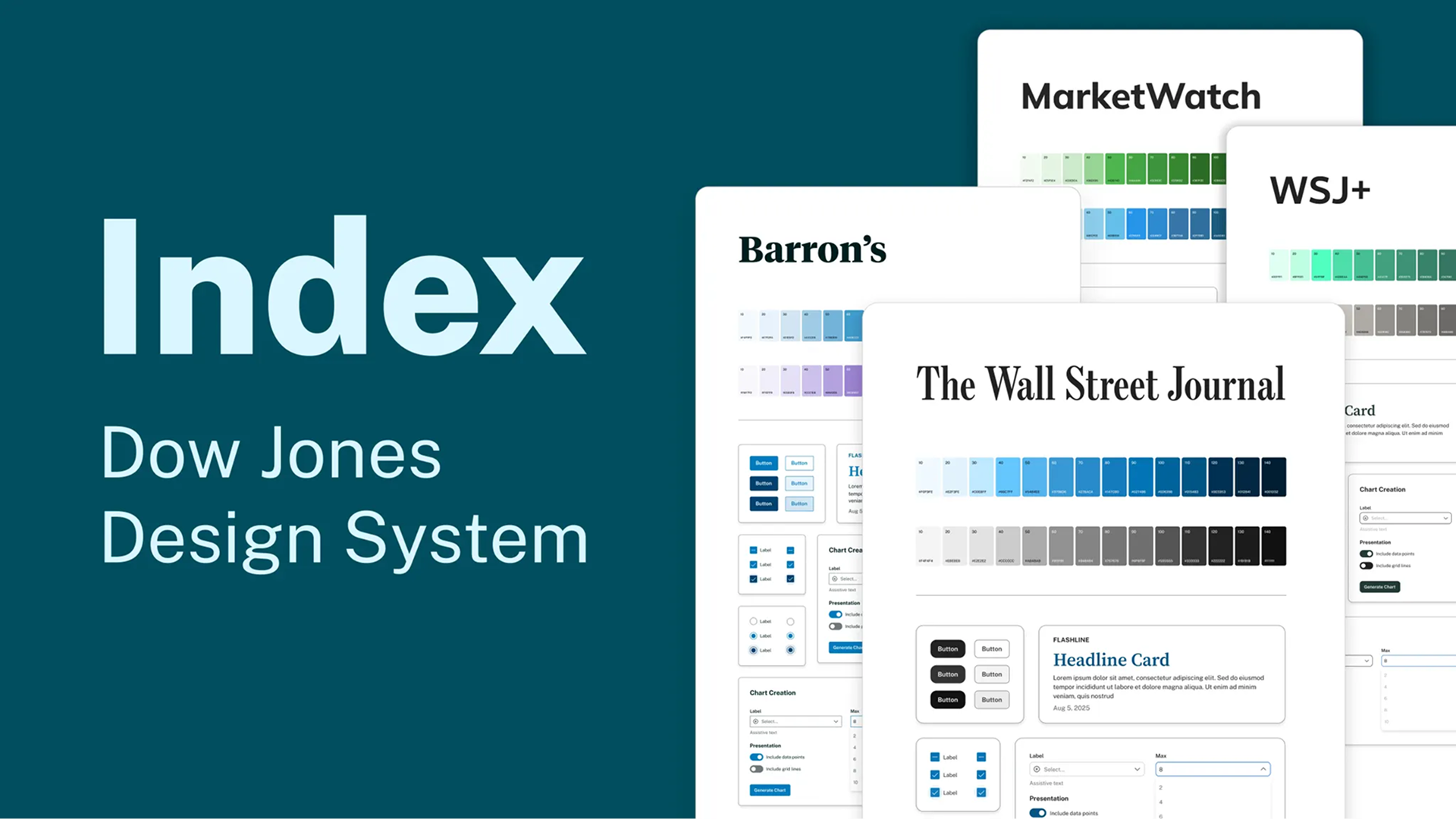
Built a scalable, multi-brand design system (Index) serving 32+ products across B2C and B2B. Governance model balances central standards with local autonomy, enabling consistent shipping without sacrificing brand identity.

Core Architecture
Central theme + component libraries
Platform-specific extensions
Product brand implementations

Governance Model
3-tier token architecture
Figma Dev Mode standard
Weekly office hours + onboarding

Users study

Key Product Decisions

Increased pattern reuse and delivery speed
By collaborating and following a Governance setup, the time to launch the initiatives was faster for design and development.

AI Feature Adoption
AI assistant features shipped, setting the architectural and experience foundation for future capabilities.